
"Kenya coffee farmers"
20000 article(s) found

The basic knowledge of picking high-quality coffee beans
Coffee trees usually blossom in 3-4 years, about 2-3 months a year, and their appearance and smell are similar to those of jasmine. when they bloom, they grow in clusters on the branches and bloom for 3-5 days. After the flowers bloom, they bear small green fruits, which ripen and turn red into ripe fruits that can be picked after a few months. The skin of ripe fruit is red. Because its shape and color are similar to cherries, ripe coffee fruit is called coffee cherry in many places.

Boutique coffee common sense when can coffee beans be picked
Coffee trees usually blossom in 3-4 years, about 2-3 months a year, and their appearance and smell are similar to those of jasmine. when they bloom, they grow in clusters on the branches and bloom for 3-5 days. After the flowers bloom, they bear small green fruits, which ripen and turn red into ripe fruits that can be picked after a few months. The skin of ripe fruit is red. Because its shape and color are similar to cherries, ripe coffee fruit is called coffee cherry in many places.
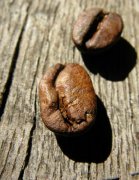
The process of coffee picking introduces the basic knowledge of coffee.
Coffee trees usually blossom in 3-4 years, about 2-3 months a year, and their appearance and smell are similar to those of jasmine. when they bloom, they grow in clusters on the branches and bloom for 3-5 days. After the flowers bloom, they bear small green fruits, which ripen and turn red into ripe fruits that can be picked after a few months. The skin of ripe fruit is red. Because its shape and color are similar to cherries, ripe coffee fruit is called coffee cherry in many places.

In which area does Yunnan grow green coffee beans? Variety price flavor describes the taste of the producing area
In which area does Yunnan grow green coffee beans? Description of variety price and flavor it was found that both City and Full-City had strong caramel flavor and similar almond fruit aroma. It is distributed from grinding to cooking, and then continues to the entrance to the finish. At the same time, in the degree of City, we can feel the softer sour taste and faint sweetness. To sum up

Kenya AB Komatina Coffee Bean Information hand-flushed Kenya Cranberry Cooking parameters
Professional coffee knowledge exchange more coffee bean information please follow the coffee workshop (Wechat official account cafe_style) Kenya Komatina cranberry washing area: Mathira Guchuko beans: Arabica SL28 SL34 planting altitude 1830-1920 meters above sea level planting soil red volcanic soil rainfall: about 1200MM cup test score 86.5. flavor description: cranberry, coke
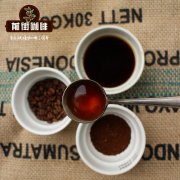
Kenya aa coffee features rich juice texture
Professional coffee knowledge exchange More coffee bean information Please pay attention to coffee workshop (Weixin Official Accounts cafe_style) Front Street-Kenya coffee grading introduction Kenya coffee mostly grows at an altitude of 1500--2100 meters, harvested twice a year. Its main characteristic is the distinct fruit fragrance, the common fruit fragrance is citrus. Kenyan coffee has a multi-layered flavor and juice

Coffee trees grow basic coffee trees usually take three to four years to blossom
Coffee trees usually blossom in 3-4 years, about 2-3 months a year, and their appearance and smell are similar to those of jasmine. when they bloom, they grow in clusters on the branches and bloom for 3-5 days. After the flowers bloom, they bear small green fruits, which ripen and turn red into ripe fruits that can be picked after a few months. The skin of ripe fruit is red. Because its shape and color are similar to cherries, ripe coffee fruit is called coffee cherry in many places.

Kenyan Coffee output Kenyan Coffee extraction parameters how Kenyan Coffee flushes out berry flavor
Professional coffee knowledge exchange more information about coffee beans Please follow the coffee workshop (Wechat official account cafe_style) in 1893, John Patterson, a Scottish missionary, introduced coffee to Kenya. It is reported that the coffee seed was obtained from Smith Mackenzie, an agent of the British East India Company in the Yemeni port city of Aden. And then in Kibwezi near Mombasa, Kenya.

Coffee beans from Africa: Kenya aa grading creates a rare sour wine.
Professional coffee knowledge exchange more coffee bean information please follow the coffee workshop (Wechat official account cafe_style) Front Street-Kenya Coffee grading introduction Kenya Kenya is an important player in East Africa in the coffee world, both in terms of its coffee quality and its business strategy. The excellent coffee produced here has a clear, bright and rising flavor throughout the tongue.

A course on the Origin Story and practice of Coffee and Mango Tea
The exchange of professional baristas Please pay attention to the Coffee Workshop (Wechat official account cafe_style) Summer is the season for mangoes. Aaron receives mangoes from his hometown Kaohsiung every year. One box is more than ten jin, which he used to eat, so he will bring it to the office to share with colleagues. But this year, just because of work, I went to Japan on a business trip for half a month in July. As soon as I got home, I found the police.

Kenyan Kenya AA Coffee Kenyan Coffee beans mocha Coffee
This classification method is based on a variety of perforated screen classification, the screen has a variety of specifications, identified by the number, the number is associated with the mesh. The size of the mesh-1 stroke 64 inches is the unit of calculation. If the diameter of the mesh is 18 stroke 64 inches, the number of the screen is 18; if the diameter of the mesh is 17 inch 64 inches, the number of the screen is 17. And so on, there are 19, 16, 15, 1

COFFEE HOLE Coffee C
Coffee development potential the so-called potential first of course depends on positioning, positioning means high sensitivity to the market, only brands that can closely follow the market orientation will not be eliminated, will always have vigor and vitality. For example, in recent years, individual coffee shops have gradually been eliminated because they are too backward in the market. In contrast, CO, the first pro-people chain coffee brand in South Korea, has become popular in recent years.

What does Kenyan coffee mean, Kenyan AA? what are the flavor characteristics?
Professional coffee knowledge exchange more coffee bean information please follow the coffee workshop (Wechat official account cafe_style). Coffee trees in Kenya are mostly planted at 1400-2000 meters above sea level, growing areas including Ruiri, Thika, Kirinyaga, Mt. Kenya West, Nyeri, Kiambu and Muranga. Mainly in the foothills of Mt.Kenya and Aberdare. There are in Kenya.

A brief introduction to the grading system of Kenyan Coffee beans how to brew and share Kenyan coffee at a ratio of 1 to 15
Professional coffee knowledge exchange more coffee bean information please follow the coffee workshop (Wechat official account cafe_style) front street-Kenya raw bean grading, brewing parameters sharing according to the sieve grading method is the method of grading according to the size of coffee beans. Raw beans are graded by determining the size of the beans through a holed iron plate sieve. The size of the hole in the screen is 1 inch to 64 inches.

Adhere to the Italian hand-drawn flowers to achieve the most ornamental coffee
The world is so big, or espresso is good, not only full-bodied, but also more ornamental, every time drinking coffee, like enjoying an artistic baptism! at the end of 2014, the century-old Italian coffee brand COFFE PASCUCCI officially opened its branch in Beijing, it maintained the core characteristics of espresso, adhering to centuries of coffee culture accumulation, the purest coffee

What is the difference between Kenya AA TOP and Kenya AA coffee beans?
For information, please pay attention to Coffee Workshop (Weixin Official Accounts cafe_style). When Kenya is mentioned, Kenya AA is the first thing that many enthusiasts think of, because it is the most exposed name both online and in stores. Moreover, anyone who knew a little about coffee beans knew that AA represented a high quality grade. The way beans are graded from one region to another
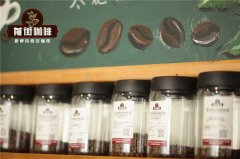
Kenya PB? Flavor and taste characteristics of coffee round beans 8 grades and standards of Kenyan coffee
Peaberry means that one coffee bean grows in a cherry, not two. Because the rounder shape minimizes the sharp edges, it makes it easier for the berries to roll in the baking room and roast slightly more evenly, bringing a very consistent flavor to the coffee. Kenyan round bean coffee tastes similar to Kenyan AA coffee. Kenya round beans (PB) coffee beans are coffee trees

A brief introduction to the characteristics of Kenya java coffee beans what are the aa grades of coffee beans?
Professional coffee knowledge exchange more coffee bean information please follow Coffee Workshop (Wechat official account cafe_style) Front Street-Kenya Coffee grading system sharing Kenya is typical of African lowland cultivation, growing high-quality Arabica coffee beans are fleshy, full-bodied, moderate acidity, complex aroma, fruity or spicy, suitable for deep roasting. Kenny.

What is the best coffee in Kenya? a brief introduction to the flavor characteristics of hand-brewed coffee
Professional coffee knowledge exchange more coffee bean information please follow the coffee workshop (Wechat official account cafe_style) front street-Kenya coffee, brewing parameters sharing Kenya is an important force in the East African region of the coffee world, both in terms of its coffee quality and its business strategy. The excellent coffee produced here has a clear, bright and rising flavor throughout the tongue.

Kenya PB Kenya Coffee grading system
Professional coffee knowledge exchange more coffee bean information please follow the coffee workshop (Wechat official account cafe_style) Kenya coffee grading system is set up under the government-led policy of managing quality and mentoring coffee farmers. After the coffee is harvested, the official unit set up by the government, the Kenya Coffee Agency (Coffee Board of Kenya referred to as CBK), was established in 1933.